
Care & Maintenance
Care and Cleaning Your Jute Area Rug
The first step is to use a coarse doormat or a walk-off mat at your front door. This will provide a great deal of protection for your new rug. The goal is to remove as much of the outside dirt as possible from the shoes of those entering your home.
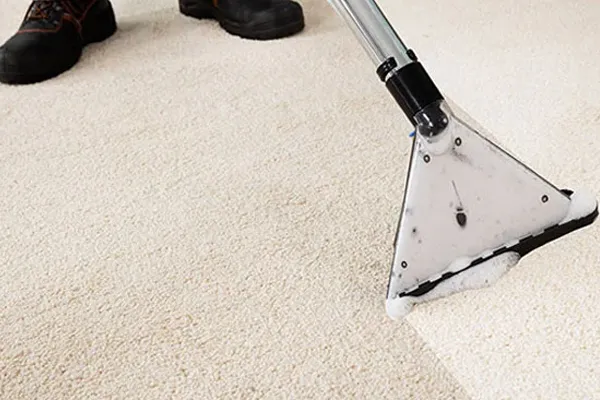
To maintain the original beauty and to prolong the life of your jute rug, vacuuming once or twice weekly is very important. This will regularly remove the fine dirt particles that can lodge between the fibers and cause additional wear. For best results, we recommend the use of a vacuum with powerful airflow and adjustable brushes. Due to the potential for rug damage, beater bar vacuums are not recommended. Do not steam clean or wet shampoo your jute rug. Plant fibers are highly absorbent, so when exposed to liquids or excessive dampness, they are subject to some shrinking and puckering. Aussbond recommends using a dry extraction carpet cleaning system. These dry carpet cleaning systems are by far the most successful method of cleaning all-natural fiber rugs. We recommend testing the cleaner on an inconspicuous section of the rug before trying to clean a more obvious area. Such dry extraction carpet cleaners as Host, Capture and others, are available at hardware stores, and the home care sections of most mass retailers.
Routine Rug Maintenance
Shedding of loose fibers is normal and will diminish with regular vacuuming.
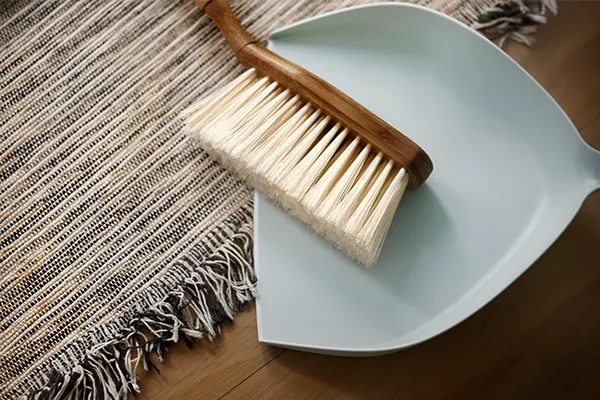
To prevent dust and crumbs from settling into your rug, vacuum regularly and/or shake.
Do not pull loose ends. Clip them with scissors to remove.
Keep away from excessive moisture.Sit eu mauris et ac imperdiet facilisi facilisi nulla adipiscing consectetur vel aliquet at condimentum.
Blot spills immediately with a white cloth.
Harsh chemicals may damage or fade rug.
Use rug protectors under heavy furniture.
For indoor use only
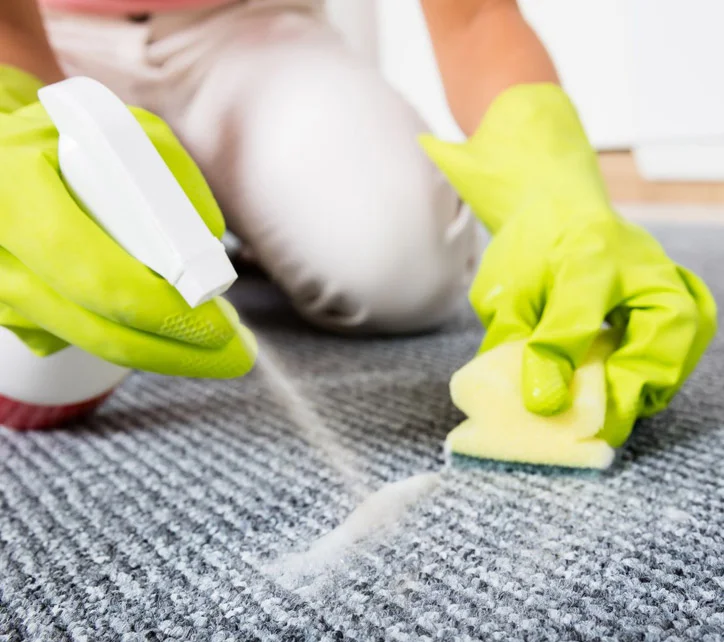
Removing Spills and Spots
Spills and spots on natural fiber rugs need immediate attention. A liquid spill left untreated will act as a magnet to any dirt particles that are in the rug, causing the dirt to rise to the surface. This dirt may cause a dark stain. To prevent this from happening, try to keep therug as soil-free as possible with regular vacuuming. When a spill occurs, even if it is only water, it is important that it be removed immediately by blotting or pat-drying the area with a clean, absorbent, white cloth. Never rub the area of the spill. Rubbing can work the liquid deeper into the fibers, making the spill more likely to stain the carpet. It can also spread the liquid to a larger area of the rug.
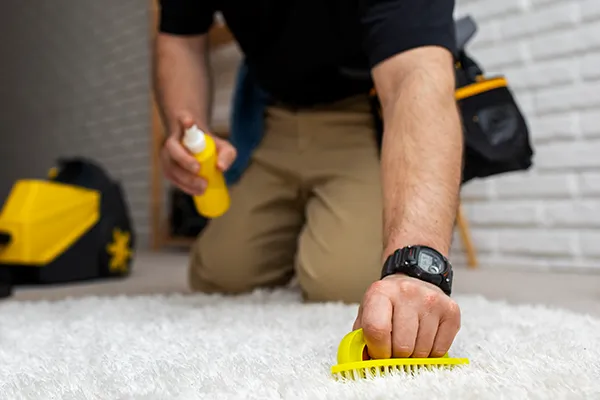
To remove spots caused by solid substances,first remove any remaining material. Scrape it up with the dull side of a butter knife or a spoon, always working from the outside of the spot towards the center. For information on cleaning specific spots and spills please see below for a list of recommended cleaning solutions.
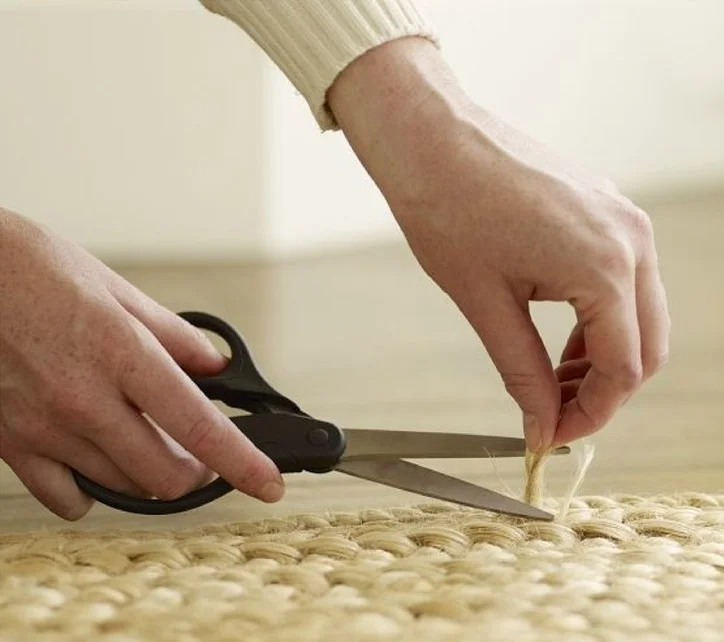
Sprouting
Natural fiber rugs may experience “sprouting” which is when small fibers stick up from the rug some time after installation. Sprouting is common with handmade rugs made from shorter fibers that are loosely woven, such as jute,wool,hemp etc.
Jute fibers are short when compared to sisal fibers, and because our jute rugs are made from hand-spun jute yarn, the short fibers have a natural tendency to pop out. This is part of the natural character of these rugs, which are also hand-braided and hand-sewn.
Sprouting is common, and requires nothing more than clipping down the fibers that have popped up with shears. Over time, the need for clipping back these fibers will diminish. The process is similar to the initial shedding of a wool or synthetic fiber rug. Jute fibers are extremely strong yet have surprisingly silky and soft feel. They also are a highly sustainable choice as jute plants grow quickly and jute yarns are 100% biodegradable.Lorem ipsum dolor sit amet, consectetur adipiscing elit. Ut elit tellus, luctus nec ullamcorper mattis, pulvinar dapibus leo.
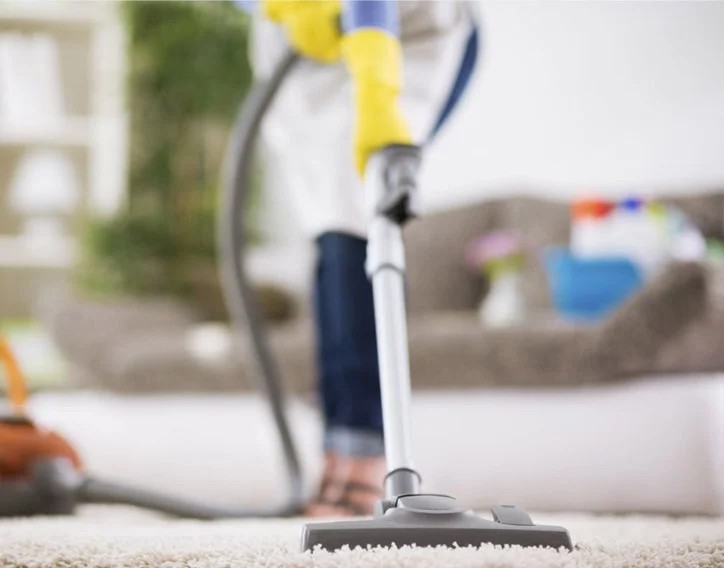
Routine Rug Maintenance
- Shedding of loose fibres is normal and will diminish with regular vacuuming.
- To prevent dust and crumbs from settling into your rug, vacuum regularly and/or shake.
- Do not pull loose ends. Clip them with scissors to remove.
- Keep away from excessive moisture.
- Blot spills immediately with a white cloth.
- Harsh chemicals may damage or fade rug.
- Use rug protectors under heavy furniture.
- For indoor use only
To maintain the original beauty and to prolong the life of your jute rug, vacuuming once or twice weekly is very important. This will regularly remove the fine dirt particles that can lodge between the fibers and cause additional wear. For best results, we recommend the use of a vacuum with powerful airflow and adjustable brushes. Due to the potential for rug damage, beater bar vacuums are not recommended. Do not steam clean or wet shampoo your jute rug. Plant fibers are highly absorbent, so when exposed to liquids or excessive dampness, they are subject to some shrinking and puckering. Aussbond recommends using a dry extraction carpet cleaning system. These dry carpet cleaning systems are by far the most successful method of cleaning all natural fiber rugs. We recommend testing the cleaner on an inconspicuous section of the rug before trying to clean a more obvious area. Such dry extraction carpet cleaners as Host, Capture and others, are available at hardware stores, and the home care sections of most mass retailers.
Use the mixtures and combinations described below according to the spill description chart at right. Always place the solutions in a spraybottle and mist them lightly onto the soiled spot.
- Detergent Solution
Mix one teaspoon of clear dishwashing liquid with one cup of lukewarm water.
- Solvent Solution
Use Host Spot Remover or any consumer-brand dry cleaning solvent.
- Vinegar Solution
Mix 1/4 cup white vinegar with 1/4 cup water.
- Ammonia Solution
Mix one tablespoon clear household ammonia with 1/2 cup water.
A. Use Host Dry Cleaner for Carpets.
B. Apply solvent then blot, detergent then blot,water then blot.
C. Apply detergent then blot, ammonia then blot, detergent then blot, water then blot.
D. Apply detergent then blot, vinegar then blot,detergent then blot, water then blot.
E. Apply detergent then blot, ammonia then blot, vinegar then blot, detergent then blot,water then blot.
F. Apply detergent then blot, ammonia then blot, water then blot, solvent then blot.
G. Freeze with ice cube then shatter with blunt object and vacuum out chips, apply solvent then blot. (For wax paper, place paper towel or paper bag over wax, iron with warm, not hot, iron to absorb.
H. Apply cool water then blot, ammonia then blot, detergent then blot, water then blot.
I. Apply acetone polish remover (not oily) then blot; repeat.
Recommended Cleaning Solutions
| Sr.No | Items Details | Method Using | Sr.No | Items Details | Method Using |
| 1 | Beer or liquor | A or D | 23 | Mascara | A or B |
| 2 | Blood | A | 24 | Mayonnaise | A or C |
| 3 | Butter | A or B | 25 | Merthiolate | A and E |
| 4 | Candy | A or E | 26 | Milk | A and E |
| 5 | Catsup | A or C | 27 | Nail Polish | I and A |
| 6 | Chewing gum | A or G | 28 | Oil-cooking | A or B |
| 7 | Chocolate | A or E | 29 | Oil-furniture | A or B |
| 8 | Coffee | A or D | 30 | Paint-latex | A or F |
| 9 | Crayon | B and A | 31 | Paint-oil base | A or B |
| 10 | Egg | A or C | 32 | Rust | A |
| 11 | Feces | A or C | 33 | Shoe polish(liquid) | A or B |
| 12 | Food colour | C and A | 34 | Shoe polish(paste) | A or B |
| 13 | Fruit juice | A or E | 35 | Soft drinks | A or E |
| 14 | Furniture polish | A or B | 36 | Tar | A and B |
| 15 | Furniture polish with stain | A or C | 37 | Tea | A or D |
| 16 | Glue / Model Cement | I | 38 | Urine | A or E |
| 17 | Glue-white | C and A | 39 | Watercolors | A or F |
| 18 | Gravy | A or E | 40 | Wax candle-color | G |
| 19 | Hair spray | A or B | 41 | Wax candle–white | G |
| 20 | Hand lotion | A or B | 42 | Wine | A or E |
| 21 | Ice cream | A or B | |||
| 22 | Ink-ballpoint | A or E | |||
| 23 | Ink-marker | A or B | |||
| 24 | Lipstick | A or B |